
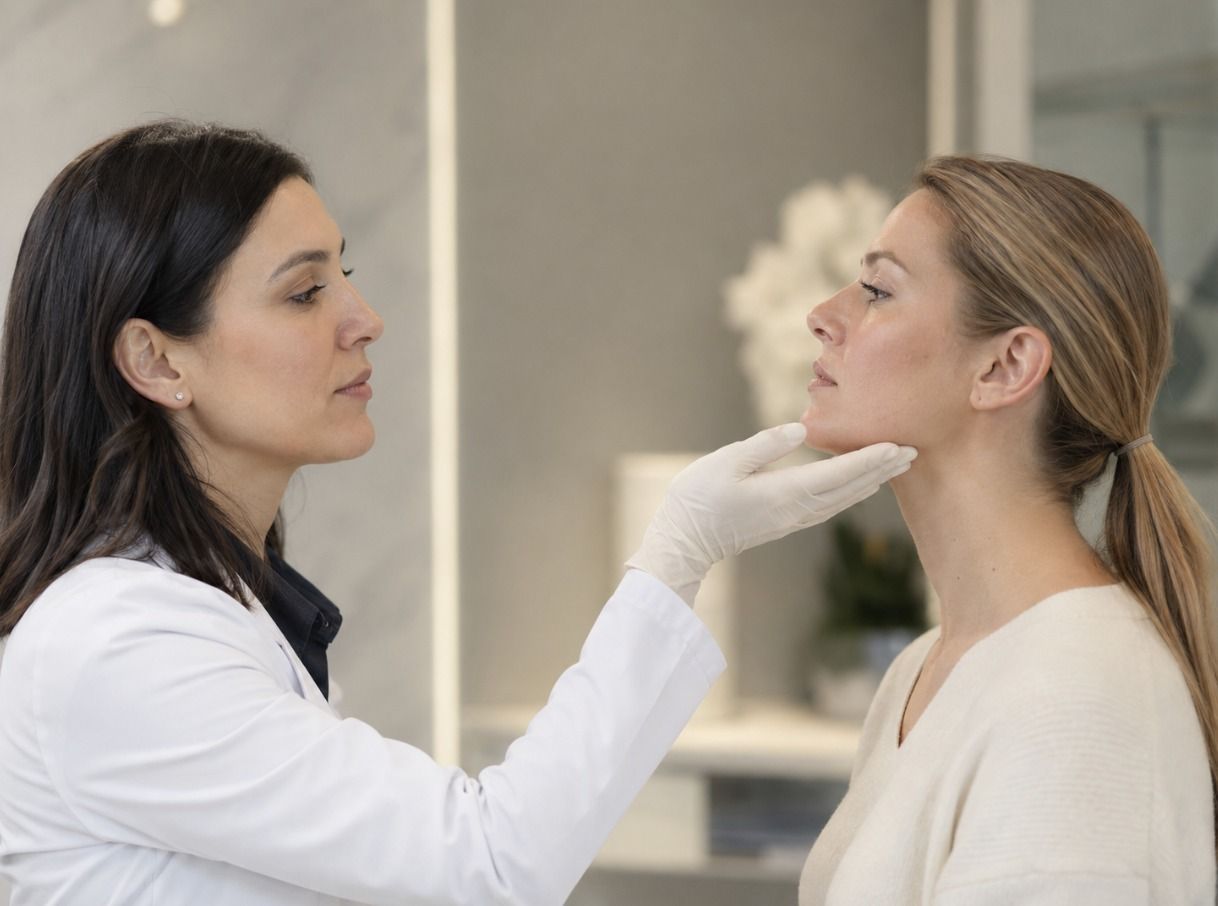
A softer jawline, a less defined chin, or changes in facial contours can make many people feel like they no longer look as refreshed as they once did. While jaw implant surgery may be the right choice for some individuals, many people are looking for a less invasive way to improve facial balance and jawline definition.
Modern cosmetic medicine offers several non-surgical options to enhance the appearance of the jawline. Through carefully selected injectable treatments and personalized treatment planning, jawline augmentation can help create a more defined profile while maintaining a natural look.
For those considering jawline augmentation in Carmel, IN, understanding the available options is the first step toward making a confident and informed decision.
What You'll Learn From This Article
- How jawline augmentation works and why it is not limited to surgery
- The differences between jaw implants and non-surgical treatment options
- Common reasons people seek chin and jawline enhancement
- Which filler treatments may help improve jawline definition
- Who may be a good candidate for treatment
- Important safety considerations and treatment limitations
- What to expect during a consultation with Michele Finley, MD, Cosmetic Medicine
What Is Jawline Augmentation?
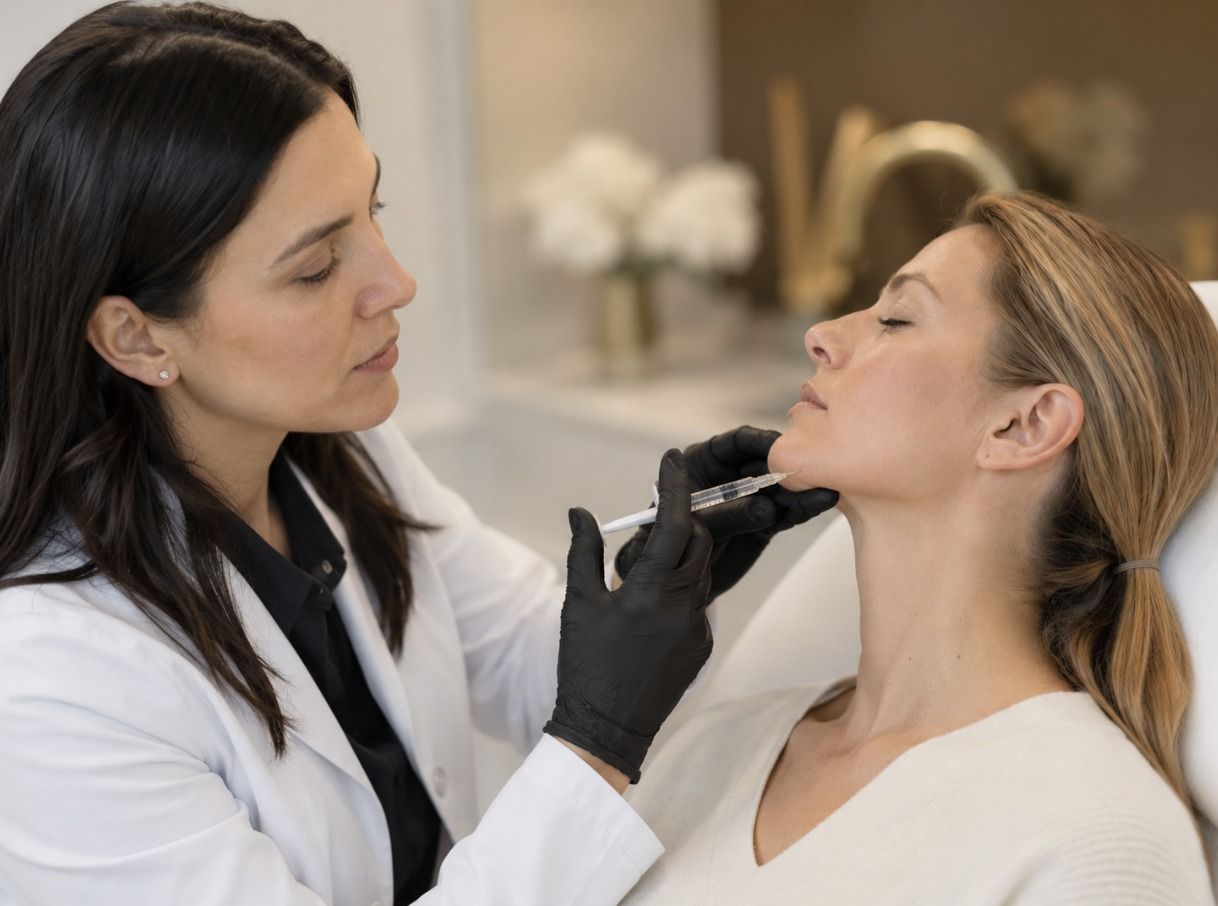
Jawline augmentation refers to treatments that improve the contour, shape, and definition of the jaw and chin. The goal is often to create a better balance between facial features, improve the appearance of the jaw angle, and support a more structured lower face.
The term "jaw augmentation" covers both surgical and non-surgical approaches. Understanding the difference can help you determine which option may align best with your goals.
Surgical vs. Non-Surgical Jaw Augmentation
Surgical jaw augmentation typically involves facial, jaw, or chin implants. During these procedures, a surgeon places implants to permanently alter the contour of the jaw or chin. Surgery usually requires anesthesia, incisions, and a recovery period.
Non-surgical jawline augmentation uses injectable fillers to enhance the appearance of the jawline and chin without an operation. These treatments can improve contour, support facial symmetry, and create a more defined jawline with little interruption to daily activities.
While surgical and non-surgical approaches share similar aesthetic goals, they differ significantly in recovery time, flexibility, and long-term commitment.
Why the Chin and Jawline Are Often Treated Together
The chin and jawline work together to create facial balance. A weak chin or receding chin can make the jawline appear less defined, even when the jaw itself has adequate structure.
Because of this relationship, providers often evaluate the chin and jawline as a single cosmetic unit. A comprehensive assessment of the lower face helps support more balanced treatment planning for chin and jawline rejuvenation.
Understanding why facial balance matters makes it easier to see why people often pursue jaw enhancement in the first place.
Why People Consider Jawline Augmentation
Jawline concerns vary from person to person. Some people have naturally softer facial contours, while others notice changes that develop over time.
Facial Balance and Profile Support
A defined jawline often contributes to overall facial harmony. Individuals may seek jawline augmentation because they want to:
- Improve profile appearance
- Enhance the chin and jaw contour
- Create better facial symmetry
- Improve the definition along the lower jaw
- Achieve a more refined jawline
For many patients, the goal is not a dramatic change. Instead, they want subtle improvements that help their facial features appear more balanced and proportionate.
Lower Face Aging and Jawline Definition
As the face ages, natural changes occur in the skin, fat pads, connective tissues, and bone structure. These changes can contribute to a softer jawline and less distinct facial contours.
Research published in the Journal of Clinical Medicine discusses how age-related structural changes in the lower face can affect the appearance of the chin, jawline, and surrounding tissues.
Common concerns may include:
- Mild jowling
- Loss of jaw angle definition
- Reduced facial symmetry
- Volume loss around the chin
- Less distinction between the jawline and neck
Fortunately, several non-surgical treatments may help address these concerns without the need for jaw augmentation surgery.
Non-Surgical Jawline Augmentation Options
Not every patient seeking jawline enhancement requires facial implants or cosmetic surgery. Today, injectable treatments offer multiple ways to improve contour and support facial balance.
The right approach depends on your anatomy, goals, and overall treatment plan.
Hyaluronic Acid Fillers for Shape and Flexibility
Hyaluronic acid fillers are commonly used for chin augmentation and jawline contouring.
These fillers can help:
- Improve jawline definition
- Enhance chin projection
- Support facial symmetry
- Add volume where needed
- Refine lower-face contours
One advantage of hyaluronic acid fillers is flexibility. Providers can often make precise adjustments to create natural-looking improvements while preserving facial character.
Calcium Hydroxylapatite Fillers for Structural Support
Some patients benefit from fillers that provide greater structural support.
Research published in Plastic and Reconstructive Surgery Global Open notes that calcium hydroxylapatite, commonly known as “Radiesse,” may be particularly useful for jawline contouring because it provides support while stimulating collagen production.
This option is often considered when a stronger definition along the jaw angle or lower jaw is desired.
Chin Filler for Improved Facial Proportion
In some cases, improving the size of the chin can significantly enhance the appearance of the jawline.
Strategic placement of filler around the chin may help:
- Improve profile balance
- Reduce the appearance of a weak chin
- Support lower-face structure
- Create a more defined transition along the jawline
Small adjustments to the chin can sometimes make a noticeable difference in overall facial harmony.
Combination Treatment Plans
Many patients achieve the best results through a customized treatment plan rather than focusing on a single area.
Depending on individual needs, treatment recommendations may include:
- Jawline filler
- Chin filler
- Skin rejuvenation treatments
- Collagen-supporting procedures
- PDO thread lifts
- Other facial contouring options
Once treatment options are identified, it becomes easier to compare them with surgical alternatives.
How Jawline Filler Compares With Jaw Implant Surgery
Jaw implants and injectable fillers can both improve the appearance of the jawline, but they serve different purposes.
| Feature | Jawline Fillers | Jaw Implant Surgery |
|---|---|---|
| Procedure Type | Non-surgical cosmetic procedure | Surgical procedure |
| Incisions | None | Small incision required |
| Anesthesia | Minimal or local comfort measures | Often performed under general anesthesia |
| Recovery | Typically shorter | Longer recovery period |
| Flexibility | Adjustments possible | Permanent structural change |
| Ideal For | Mild to moderate contour enhancement | Significant structural correction |
| Downtime | Usually limited | Often more extensive |
Jaw implant surgery may be appropriate for patients seeking substantial skeletal changes. Non-surgical treatments are often chosen by individuals seeking flexibility, reduced downtime, and gradual enhancement.
Choosing between these approaches begins with determining whether you are a candidate for non-surgical treatment.
Who May Be a Good Candidate for Non-Surgical Jawline Augmentation?

Not every concern requires enhancement surgery or custom jaw implants.
A detailed consultation helps determine which treatment option best fits your goals and facial anatomy.
Good Candidates for Jawline Enhancement
You may be a candidate for jawline augmentation if you:
- Want more jawline definition
- Have mild to moderate volume loss
- Have a weak chin or mild chin recession
- Prefer to avoid surgery
- Want limited downtime
- Have realistic expectations about treatment outcomes
Patients who want subtle, natural-looking improvements often find non-surgical approaches appealing.
When Surgery May Be More Appropriate
There are situations where surgical treatment may provide a better solution.
Examples may include:
- Significant skeletal imbalance
- Severe jaw deficiencies
- Bite abnormalities
- Functional jaw concerns
- Conditions requiring orthognathic surgery
A consultation helps determine whether non-surgical treatment or another referral may be the most appropriate path forward.
The next step is understanding what happens during the evaluation process.
What to Expect During a Jawline Augmentation Consultation in Carmel, IN
The consultation is one of the most important parts of the treatment process.
At Michele Finley MD Cosmetic Medicine, treatment recommendations begin with understanding your goals rather than selecting a procedure first.
Facial Assessment and Treatment Planning
Your provider will typically evaluate:
- Facial proportions
- Chin projection
- Jawline contour
- Skin quality
- Facial symmetry
- Overall lower-face structure
This assessment helps identify which treatment options may best support your cosmetic goals.
Choosing the Right Product and Placement
Different fillers have different characteristics.
Factors that influence product selection may include:
- Desired contour
- Skin thickness
- Treatment area
- Structural support needs
- Long-term maintenance preferences
Precise placement is particularly important around the jaw and chin due to the complex anatomy of these areas.
Establishing Natural-Looking Goals
Many Carmel patients are looking for improvement, not a dramatic transformation.
A thoughtful treatment plan focuses on enhancing existing features while maintaining a natural appearance that fits the rest of the face.
Once a treatment plan is established, safety and recovery become important parts of the discussion.
Safety, Recovery, and Treatment Limitations

Every cosmetic procedure comes with considerations that should be discussed openly and honestly.
Common Recovery Expectations
Following jawline filler treatment, patients commonly experience:
- Mild swelling
- Temporary tenderness
- Bruising
- Minor redness
These effects are usually temporary and often improve over several days.
The Cleveland Clinic notes that swelling and bruising are common short-term effects following jawline filler treatment.
Why Provider Expertise Matters
The jawline contains important blood vessels, nerves, and anatomical structures.
Research continues to emphasize the importance of advanced anatomical knowledge when performing facial filler procedures.
Choosing an experienced, medically trained provider is an important part of treatment safety.
Understanding Treatment Limitations
Non-surgical jawline augmentation can improve contour and facial balance, but it has limitations.
It cannot:
- Change jaw function
- Correct severe skeletal abnormalities
- Replace reconstructive surgery
- Serve as a substitute for orthognathic surgery when medically indicated
A clear understanding of these limitations helps support realistic expectations and informed decision-making.
With that foundation in place, many patients want to know what distinguishes one provider from another.
Why Choose Michele Finley, MD for Jawline Augmentation in Carmel, IN?
Trust plays a major role in cosmetic medicine.
Patients throughout Carmel and surrounding communities often seek a provider who combines experience, honest guidance, and personalized care.
Physician-Led Cosmetic Medicine
Dr. Michele Finley has specialized in aesthetic medicine since 2002 and founded her practice in 2003.
Her physician-led approach prioritizes patient education, safety, and individualized treatment planning.
Personalized Recommendations
No two faces age the same way, and no two treatment plans should be identical.
Our team takes the time to understand your concerns, evaluate your anatomy, and discuss options that fit your goals and comfort level.
A Commitment to Quality Care
At Michele Finley MD Cosmetic Medicine, patients benefit from:
- More than two decades of cosmetic medicine experience
- Advanced aesthetic treatment options
- Customized treatment planning
- Honest recommendations
- A welcoming and supportive environment
Our goal is to help patients make informed decisions and feel comfortable throughout every stage of their aesthetic journey.
Is Non-Surgical Jawline Augmentation Right for You?
Jawline augmentation can help improve facial balance, chin projection, and jawline definition for many patients without surgery.
The most appropriate treatment depends on your anatomy, goals, and preferences. Some individuals may benefit from injectable treatments, while others may be better candidates for surgical solutions such as facial implants.
A consultation provides an opportunity to discuss your concerns, learn about your options, and receive recommendations tailored to your unique facial structure.
If you are considering jawline augmentation in Carmel, IN, schedule a consultation with Michele Finley, MD, Cosmetic Medicine. Our experienced team can help you understand your options and create a personalized treatment plan designed around your goals, comfort, and natural features.
Frequently Asked Questions About Jawline Augmentation
1. Is jawline augmentation the same as jaw implant surgery?
No. Jawline augmentation is a broad term that includes both surgical and non-surgical treatments.
Jaw implant surgery involves permanent facial implants, while non-surgical options typically use injectable fillers to improve contour and facial balance.
2. Can jawline augmentation improve a weak chin?
In many cases, it can. Strategic chin filler placement may improve projection and create better harmony between the chin and jawline. The best approach depends on your anatomy and treatment goals.
3. How long does non-surgical jawline augmentation last?
Results vary depending on the filler used, treatment area, metabolism, and maintenance schedule.
Your provider can discuss what may be realistic based on your treatment plan.
4. Is there downtime after jawline augmentation treatment?
Most patients experience mild swelling, tenderness, bruising, or redness. These effects are typically temporary and often improve within several days.
5. What is the best jawline augmentation option in Carmel, IN?
There is no universal answer. The right treatment depends on your facial structure, degree of chin projection, jawline concerns, and desired outcome. A personalized consultation is the best way to determine which option may be appropriate for you.

Dr. Michele Finley
Meet Michele Finley, MD, a renowned expert in cosmetic treatments, dedicated to enhancing your beauty and confidence with personalized care and precision.