
Facial aging often shows up gradually. A softer jawline, heavier cheeks, loose skin around the neck, or a tired appearance in photos can become more noticeable over time. Many people want improvement, but they may not feel ready for facelift surgery or a long recovery process.
That is why interest in the PDO thread lift continues to grow among patients in Carmel, Indiana. This minimally invasive cosmetic procedure uses dissolvable threads to lift sagging skin while stimulating collagen production beneath the skin's surface.
At Michele Finley MD Cosmetic Medicine, treatment planning starts with listening. Dr. Michele Finley and her team focus on natural-looking facial rejuvenation, honest guidance, and customized care that fits your goals, anatomy, and comfort level.
What You'll Learn From This Article
- How PDO threads work to support and lift sagging skin
- Which areas of the face and neck may respond well to treatment
- What recovery from a PDO thread lift typically involves
- How PDO thread lift cost is determined in Carmel
- The difference between PDO threads, dermal fillers, and facelift surgeries
- Why provider experience and treatment planning matter for safety and results
What Is a PDO Thread Lift?
A PDO thread lift is a non-surgical cosmetic procedure designed to lift and tighten mild to moderate skin laxity. The treatment uses dissolvable sutures called polydioxanone threads, commonly known as PDO threads.
These threads are inserted under the skin to provide support for sagging tissue while encouraging the body’s natural healing response. Over time, the threads dissolve, but collagen stimulation may continue even after they’re absorbed.
Research published in the journal Life describes thread lifting as a minimally invasive option that can support facial rejuvenation and improve mild tissue laxity in carefully selected patients.
The appeal for many patients is simple. A PDO thread lift can create a subtle improvement without the downtime associated with traditional facelift surgeries.
That leads many patients to ask the next important question: how PDO threads actually work once they're placed beneath the skin.
How PDO Threads Work Under the Skin
PDO threads work in two ways. First, the threads create immediate structural support that may help reposition mild sagging in certain areas of the face or neck. Second, the treatment stimulates collagen production as the body responds to the threads.
Collagen is the protein that helps maintain skin firmness, elasticity, and support. As collagen levels decrease with age, skin may begin to look thinner or less defined.
Several thread types may be used depending on your goals, including:
- Cog threads for lifting and support
- Mono threads for skin tightening and collagen stimulation
- Smooth threads for subtle rejuvenation and texture support
The number of threads used, placement pattern, and treatment depth vary from person to person.
PDO Thread Lift vs Facelift Surgery
PDO thread lifts and facelift surgeries both address sagging skin, but they're very different procedures.
Facelift surgery removes excess skin and repositions underlying tissue through surgical incisions. A PDO thread lift is a minimally invasive treatment performed in the office with a shorter recovery period and more subtle lifting effects.
Patients with mild to moderate sagging often prefer PDO threads because the treatment doesn't require general anesthesia or surgical recovery. Patients with significant skin laxity may still benefit more from a plastic surgery consultation.
Understanding what concerns PDO threads can realistically improve helps set clear expectations before treatment.
What Concerns Can a PDO Thread Lift Improve in Carmel, IN?
PDO thread lifts are commonly used to address early-to-moderate signs of facial aging.
For many patients, the goal is not a dramatic change. Instead, treatment focuses on restoring definition, improving facial balance, and helping the face appear more refreshed.
Before discussing candidacy, it helps to understand the areas PDO threads are most often used to treat.
Common Treatment Areas
Depending on your anatomy and treatment plan, PDO threads may help support:
- Mild jowling
- Lower face sagging
- Jawline softness
- Cheek laxity
- Neck laxity
- Heavy brows
- Mild loose skin around the midface
Results vary based on skin quality, collagen production, facial structure, and the degree of tissue laxity.
When PDO Threads May Be Combined With Other Treatments
PDO thread lifts are often combined with other cosmetic treatments for a more balanced result.
At Michele Finley MD Cosmetic Medicine, treatment plans may include a combination of services depending on your goals and concerns.
| Concern | Treatment That May Be Recommended |
|---|---|
| Volume loss | Dermal fillers or Sculptra |
| Dynamic wrinkles | BOTOX or Dysport |
| Skin texture concerns | Laser treatments or chemical peels |
| Loose skin support | PDO threads |
| Overall skin quality | Facials or skin rejuvenation treatments |
This customized approach allows treatment plans to address multiple concerns at once while keeping results natural-looking.
Once treatment goals are identified, the next step is determining which types of PDO threads may work best for your anatomy.
Types of PDO Threads Used in a Thread Lift Procedure
Not all PDO threads work the same way. Different thread designs are used for different treatment goals.
Choosing the appropriate thread type depends on skin thickness, treatment area, and the amount of lifting support needed.
Cog Threads, Mono Threads, and Smooth Threads
Cog threads contain small barbs that help grip tissue and create lifting support beneath the skin. These threads are commonly used in areas where lifting sagging tissue is the primary goal.
Mono threads are smoother and often used to stimulate collagen production while supporting mild tightening effects.
Smooth threads may help improve subtle texture concerns and skin support in select areas.
Your provider may use one type of thread or combine several thread types during the same procedure.
Why Technique and Anatomy Matter
Thread lift procedures require careful planning and knowledge of facial anatomy.
Research published in Life notes that provider technique and anatomical understanding play an important role in both safety and outcomes.
Several factors influence treatment planning, including:
- Skin thickness
- Degree of laxity
- Facial symmetry
- Thread placement angle
- Treatment depth
- Overall skin elasticity
For many patients, choosing an experienced provider offers reassurance that treatment recommendations are based on anatomy rather than trends.
Understanding how the procedure is performed can also make the treatment process feel more approachable.
What Happens During a PDO Thread Lift Procedure?
Most PDO thread lift procedures are performed in the office and don't require general anesthesia.
The appointment itself is usually straightforward, although each treatment plan is customized to the patient.
The process starts well before threads are placed beneath the skin.
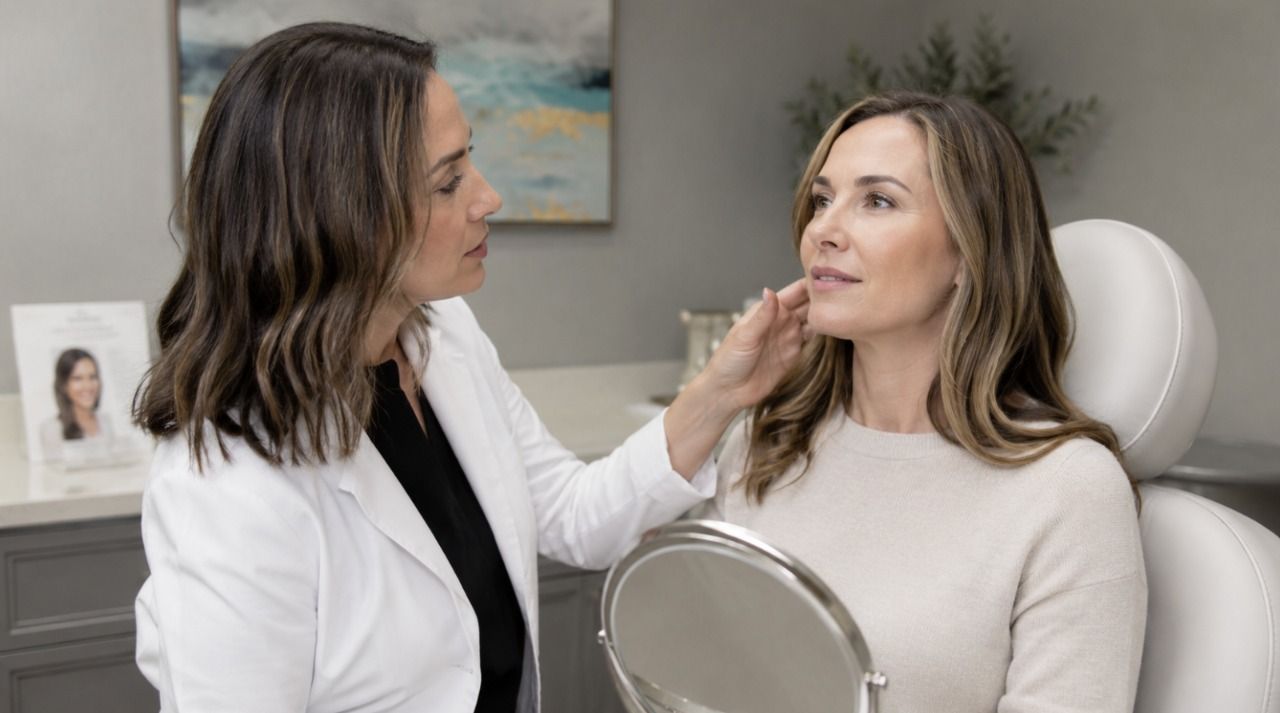
Consultation and Treatment Planning
Your consultation typically includes:
- Review of your medical history
- Discussion of your goals
- Facial assessment
- Evaluation of skin laxity
- Review of treatment options
- Discussion of recovery expectations
- Personalized cost estimate
At Michele Finley MD Cosmetic Medicine, consultations are designed to help patients feel informed rather than pressured.
The Procedure Step by Step
A PDO thread lift procedure often includes:
- Cleansing and preparation of the skin
- Local numbing for comfort
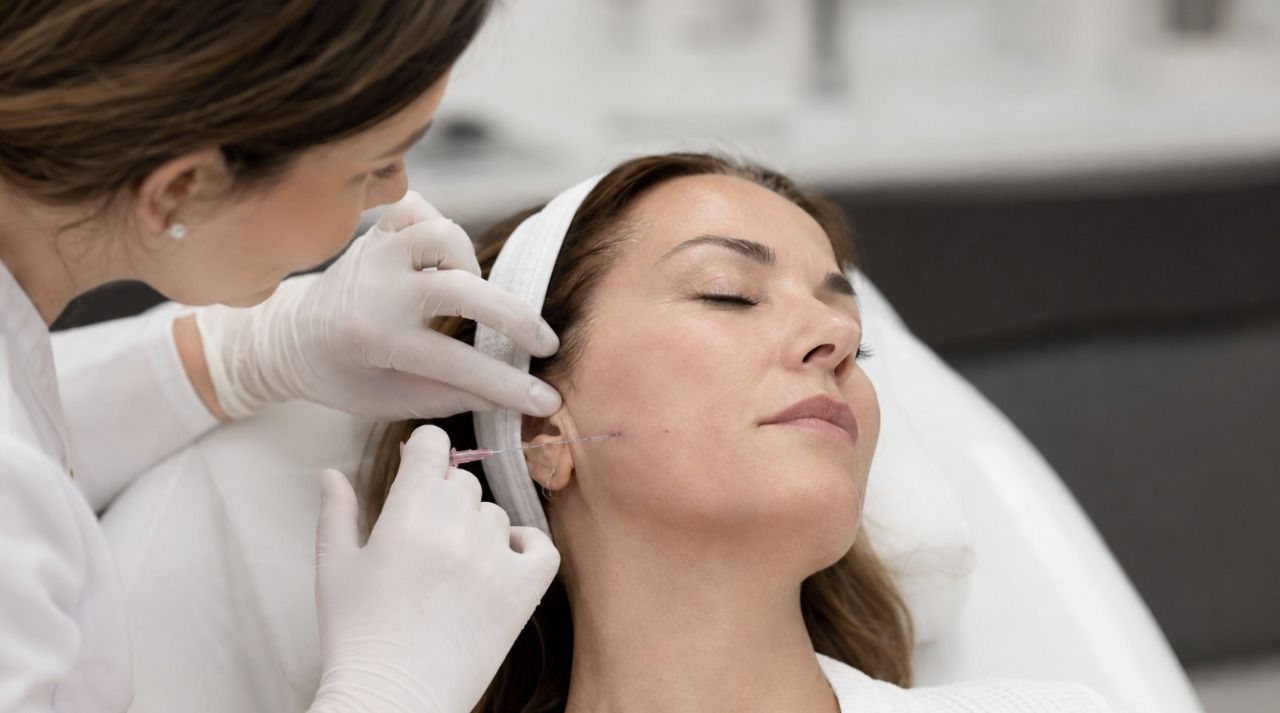
- Placement of threads beneath the skin using a cannula or needle
- Adjustment of lifting vectors
- Trimming and securing the threads
- Review of aftercare instructions
Procedure length depends on the treatment area and the number of threads used, but many appointments take less than two hours.
After treatment, patients are often most interested in understanding what results may look like and how long they may last.
PDO Thread Lift Benefits: What Patients May Notice
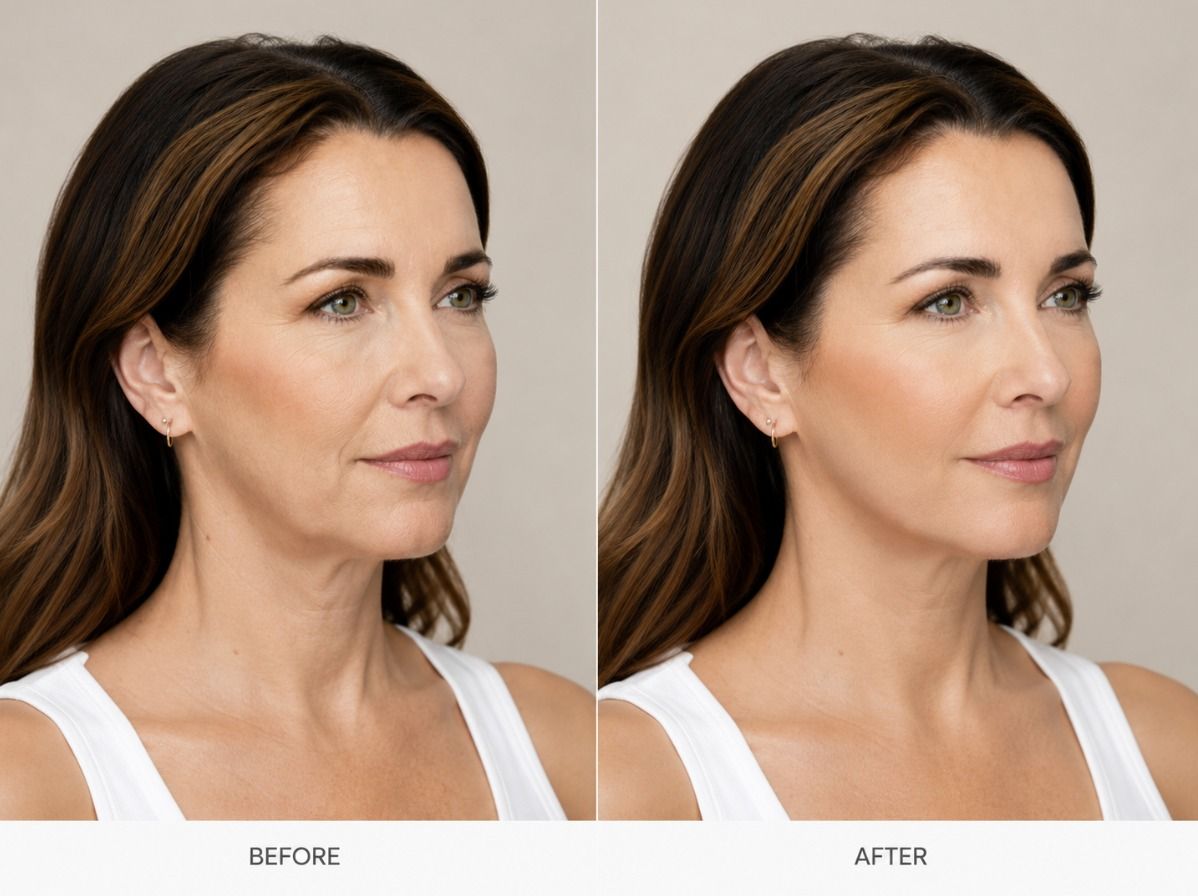
PDO thread lifts can offer a subtle but meaningful improvement for the right candidate. The treatment is designed to support facial structure while encouraging gradual skin rejuvenation by stimulating collagen production. For many patients, the appeal comes from looking refreshed without appearing dramatically different.
Lift, Tightening, and Collagen Support
Potential benefits may include:
- Improved jawline definition
- Mild lifting effects
- Firmer appearing skin
- Better facial contour
- Support for sagging skin
- Gradual improvement in skin quality
Some lifting effects may be visible shortly after treatment, while collagen-related improvement develops gradually over time.
Why Results Vary From Patient to Patient
PDO thread lift results vary based on several factors, including:
- Age
- Skin quality
- Lifestyle habits
- Degree of skin laxity
- Treatment area
- Thread type
- Collagen response
Published research supports PDO thread lifting as a useful option for selected patients seeking minimally invasive facial rejuvenation.
Still, realistic expectations matter. PDO threads can support and tighten mild to moderate sagging skin, but they don't create the same degree of correction as facelift surgery.
Recovery is another important part of the decision-making process, especially for patients balancing work, family, and social commitments.
PDO Thread Lift Recovery and Side Effects
Recovery from a PDO thread lift is generally shorter than that from surgical facial procedures, although downtime still varies from person to person.
Most patients experience temporary swelling or tenderness after treatment.
Knowing what to expect ahead of time often makes the recovery process feel more manageable.
What to Expect After Treatment
Temporary side effects may include:
- Swelling
- Bruising
- Tightness
- Mild soreness
- Tenderness
- Temporary dimpling or unevenness
Research discussing PDO thread lift recovery notes that these side effects are usually temporary and improve as healing progresses.
Aftercare and Normal Activities
Your provider may recommend:
- Sleeping on your back for several nights
- Avoiding strenuous exercise temporarily
- Limiting excessive chewing movements
- Avoiding facial massage during early healing
- Avoiding pressure on the treated areas
Many patients return to normal activities relatively quickly, although individual healing times vary.
As swelling settles and collagen production develops, many patients begin wondering how long their results may continue to improve.
How Long Does a PDO Thread Lift Last?
PDO threads dissolve naturally over time, but the collagen response they stimulate may persist even after the threads are absorbed.
According to the Cleveland Clinic, PDO thread lift results may last between one and three years, depending on the treatment plan and individual factors.
Factors That Influence Longevity
Several factors affect how long results last, including:
- Age and skin quality
- Lifestyle habits
- Smoking
- Sun exposure
- Treatment area
- Thread type
- Natural collagen production
Some patients choose maintenance treatments over time to help preserve their results.
Cost is another common consideration, especially for patients comparing PDO threads with other cosmetic procedures.
PDO Thread Lift Cost in Carmel, IN
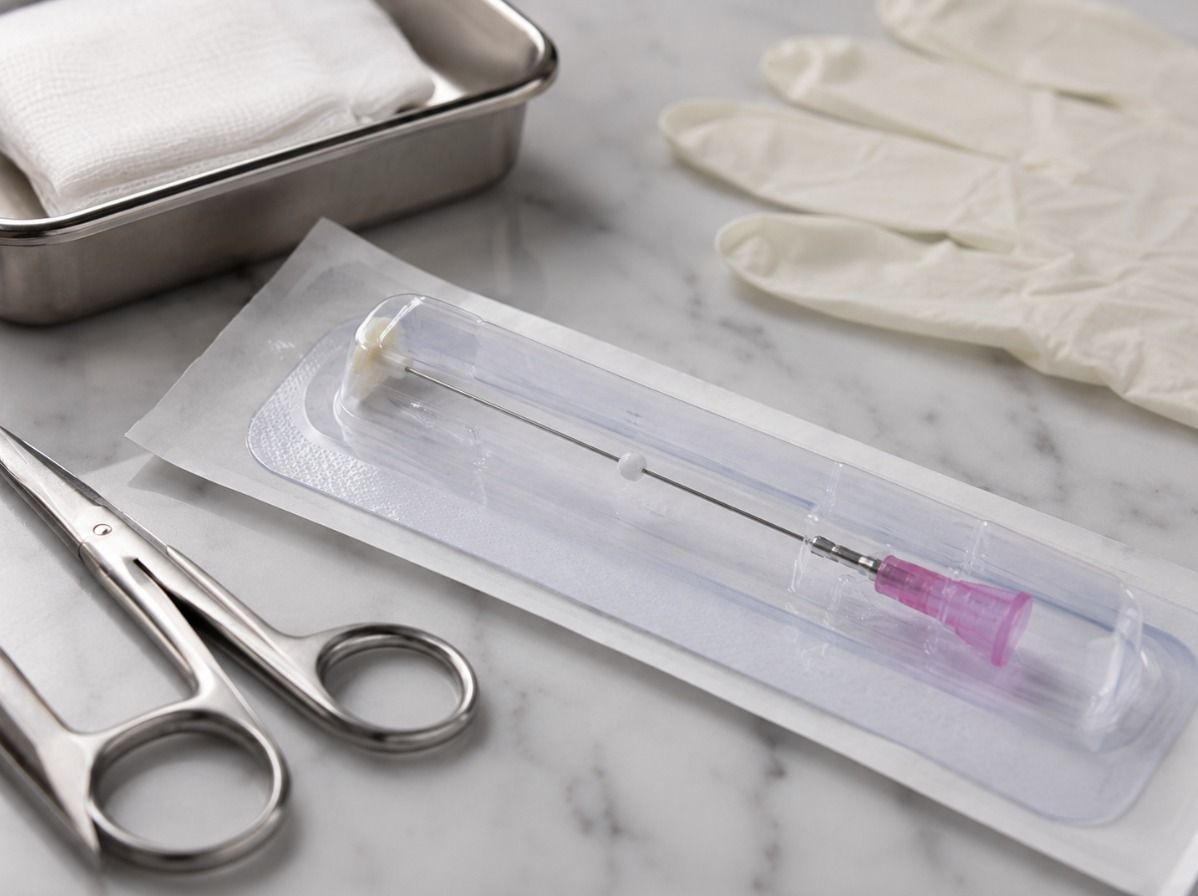
The cost of a PDO thread lift varies because every treatment plan is different. In Carmel, IN, patients can generally expect roughly $1,300 to $2,700 for a typical PDO thread lift, with smaller treatments starting lower and more comprehensive face or neck work costing more.
The exact quote usually depends on the number of threads used, whether the cheeks, jawline, brows, or neck are treated, and whether PDO threads are combined with treatments such as filler or skin tightening. A consultation is usually the most accurate way to understand what your treatment may involve.
What Affects PDO Thread Lift Cost?
Several factors influence cost, including:
- Treatment area size
- Number of threads used
- Thread type
- Combination treatments
- Provider experience
- Complexity of facial anatomy
More advanced lifting plans generally require additional threads, more treatment time, and a more customized approach.
Why Consultation Matters
Consultation allows your provider to evaluate:
- Your facial structure
- Degree of skin laxity
- Treatment goals
- Recovery expectations
- Whether other treatments may be helpful
This process helps create a personalized plan instead of a one-size-fits-all recommendation. For patients considering PDO threads, candidacy is often just as important as cost or recovery time.
Is a PDO Thread Lift Right for You?
PDO thread lifts are often best suited for patients with mild to moderate skin laxity who want improvement without surgery.
The treatment can support facial rejuvenation, but results depend on anatomy, skin quality, and realistic expectations.
The best way to determine whether PDO threads align with your goals is through a personalized consultation.
Good Candidates for PDO Threads
You may be a good candidate if you:
- Have mild to moderate sagging skin
- Prefer a non-surgical approach
- Want a shorter recovery time than facelift surgery
- Have realistic expectations
- Want natural-looking improvement
When Another Treatment May Be Better
Some patients may benefit more from:
- Facelift surgery for advanced laxity
- Dermal fillers for volume loss
- Laser treatments for texture concerns
- Skin tightening procedures for overall skin support
At Michele Finley MD Cosmetic Medicine, treatment recommendations are based on your individual concerns, not trends or one standard treatment plan.
Ready to Learn More About PDO Thread Lift in Carmel, IN?
Many patients want cosmetic treatments that help them look refreshed while still feeling like themselves. They also want guidance from a provider who values safety, honesty, and thoughtful treatment planning.
At Michele Finley MD Cosmetic Medicine, PDO thread lift treatments are approached with that philosophy in mind. Dr. Michele Finley and her team create personalized plans designed around your goals, comfort level, and natural anatomy.
If you're considering a PDO thread lift in Carmel, IN, schedule a personalized consultation with Dr. Michele Finley. Together, you'll review your goals, discuss treatment options, and create a plan designed to achieve natural-looking, long-lasting facial rejuvenation.
Frequently Asked Questions About PDO Thread Lift in Carmel, IN
1. How much does a PDO thread lift cost in Carmel, IN?
PDO thread lift cost depends on the treatment area, number of threads used, thread type, and whether additional cosmetic treatments are included in your plan.
2. How long does a PDO thread lift last?
Results may last between one and three years, depending on factors such as age, skin quality, lifestyle habits, and collagen response.
3. What is recovery from a PDO thread lift like?
Most patients experience temporary swelling, bruising, tenderness, or tightness after treatment. Recovery is typically shorter than facelift surgery, although healing time varies by person.
4. Is a PDO thread lift better than dermal fillers for facial rejuvenation?
PDO threads and dermal fillers address different concerns. PDO threads help lift sagging tissue, while fillers restore lost facial volume. Some patients benefit from combining both treatments.
5. Can a PDO thread lift replace facelift surgery?
PDO thread lifts can improve mild to moderate sagging skin, but they don't provide the same level of correction as facelift surgery. Patients with more advanced laxity may require other treatment options.

Dr. Michele Finley
Meet Michele Finley, MD, a renowned expert in cosmetic treatments, dedicated to enhancing your beauty and confidence with personalized care and precision.